TCB June 2026

The Price of Power Is Rising. Philadelphia’s Economy Cannot Afford to Ignore It.
By Jeff Hornstein, PhD, Executive Director
Economy League of Greater Philadelphia
Economic competitiveness is often measured through jobs, investment, workforce growth, and innovation. Increasingly, however, another factor is shaping the future of regions like Greater Philadelphia: the cost of energy.
For many households and businesses, electricity is no longer a routine monthly expense. It is becoming a growing source of financial pressure. Rising energy costs affect family budgets, operating expenses, consumer spending, and ultimately the region's ability to remain competitive in a rapidly changing economy.
The challenge is straightforward. Demand for electricity is growing at a pace not seen in years. Data centers, advanced manufacturing, electrification, and broader economic growth are placing new demands on the grid. At the same time, new energy supply has struggled to keep pace.
When demand rises faster than supply, prices increase. That reality is now showing up in electric bills across Southeastern Pennsylvania.
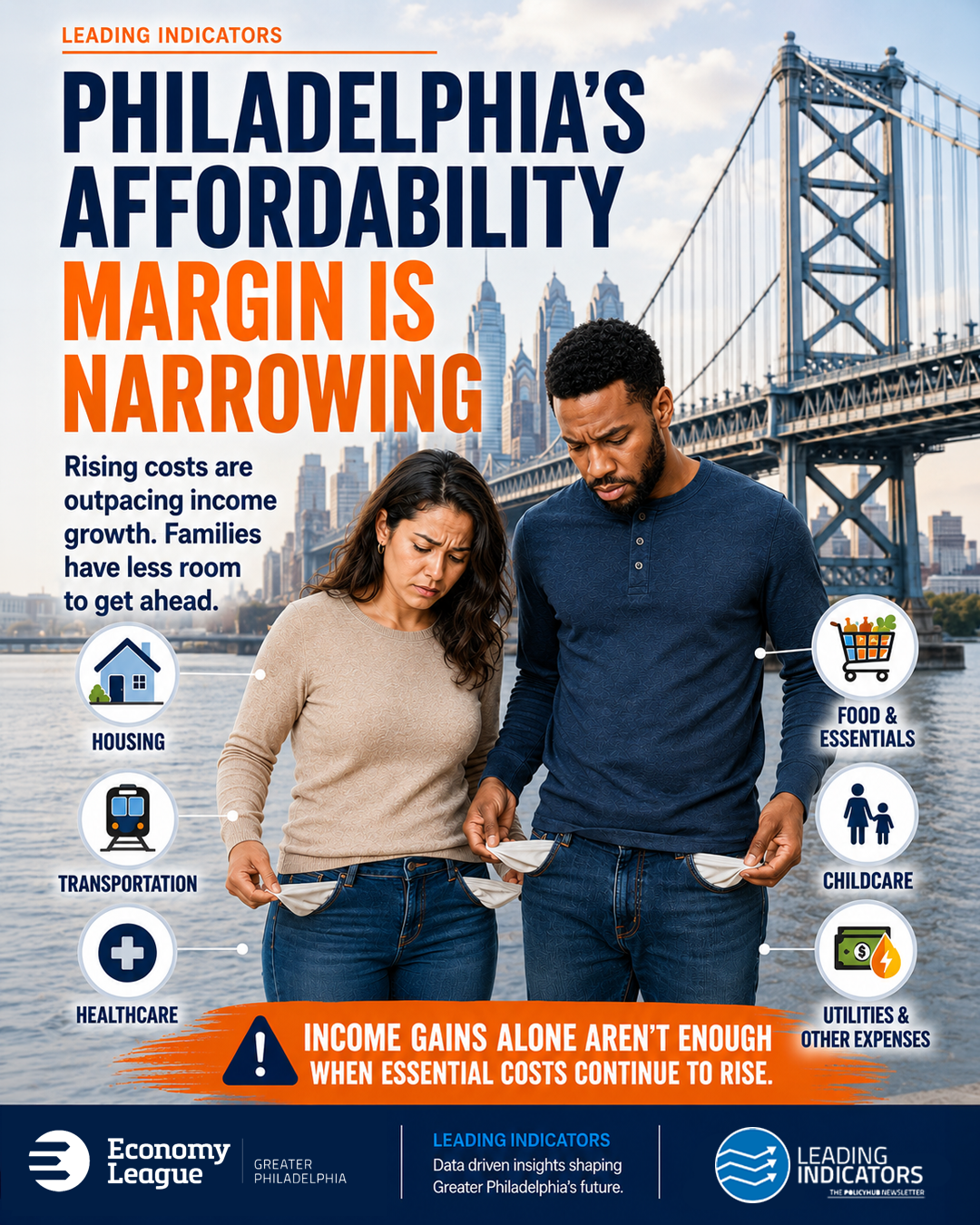
For households already managing rising costs for housing, transportation, child care, and food, higher utility bills create difficult tradeoffs. Families cannot simply stop using electricity. Instead, they reduce spending elsewhere, delay purchases, or fall behind on payments. Those decisions ripple throughout the economy, affecting neighborhood businesses and local economic activity.
The burden is particularly significant for lower income households, which spend a larger share of their income on essential utilities. When energy costs rise, these households have fewer options and less flexibility. The result is increased financial strain that can undermine household stability and long-term economic mobility.
Businesses face similar challenges.
Small businesses, manufacturers, retailers, restaurants, and nonprofit organizations all depend on reliable and affordable electricity. Rising operating costs can limit hiring, delay expansion plans, and reduce resources available for investment. In a competitive regional economy, affordability matters. Regions that can provide reliable energy at reasonable costs are better positioned to attract employers, retain talent, and support long term growth.
None of this diminishes the importance of reliability.
A modern economy cannot function without a dependable electric grid. Hospitals, universities, research institutions, logistics centers, transit systems, and commercial corridors all require uninterrupted power. Reliability remains essential to public safety and economic performance.
The challenge is that reliability and affordability can no longer be treated as separate objectives. A successful energy strategy must achieve both.
That is why the current conversation around energy costs requires a comprehensive response.
First, infrastructure planning must reflect the reality of growing demand. The region needs investments that strengthen transmission capacity, modernize the grid, and accelerate the ability to connect new energy resources. Long planning timelines and delayed project development create constraints that ultimately contribute to higher costs for consumers.
Second, policymakers and market operators should continue examining opportunities to improve transparency and affordability within energy markets. Consumers benefit when markets function efficiently, pricing is clear, and households can make informed decisions. Ensuring that energy systems work effectively for customers is essential to maintaining public confidence and economic stability.
Third, Philadelphia and the broader region should expand access to energy solutions that help reduce long term exposure to price volatility. Community solar projects, distributed energy resources, energy efficiency improvements, and building upgrades can all play a role in lowering costs over time. These opportunities are especially important for renters and lower income households that may not have access to traditional energy investments.
Fourth, customer assistance programs must remain a priority. Payment plans, affordability programs, emergency assistance funds, and energy efficiency support provide meaningful relief for households facing immediate financial pressures. These programs are not simply social supports. They are economic stabilizers that help families remain financially secure while contributing to stronger communities.
Finally, regional leaders should recognize that energy affordability is fundamentally connected to economic competitiveness. The decisions made today about infrastructure, energy markets, and customer support will influence the region's ability to attract investment, support businesses, and create opportunity for residents.
Philadelphia has always succeeded when it confronted challenges with practical solutions and long-term thinking. The current energy challenge requires that same approach.
The good news is that this is not a choice between affordability and reliability. Both are achievable. But doing so will require coordination, investment, and a shared commitment to modernizing systems that were not designed for today's level of demand.
The cost of keeping the lights on is rising. How we respond will help determine the strength, resilience, and competitiveness of Greater Philadelphia's economy for years to come.
Jeff Hornstein, PhD
Executive Director
Economy League of Greater Philadelphia
The Economy League of Greater Philadelphia is a nonpartisan nonprofit organization that conducts research and facilitates collaborative action on the region’s most pressing economic challenges.